
Zirconium corundum bricks, also known as electrofused bricks, are abbreviated as AZS (derived from the first letters of the Al₂O₃-ZrO₂-SiO₂ ternary system composition). They are a special refractory material made from industrial alumina and selected zircon sand, melted at approximately 1800-1900℃ and then cast. Based on the zirconium oxide (ZrO₂) content, they are mainly classified into models such as AZS-33#, AZS-36#, and AZS-41#.
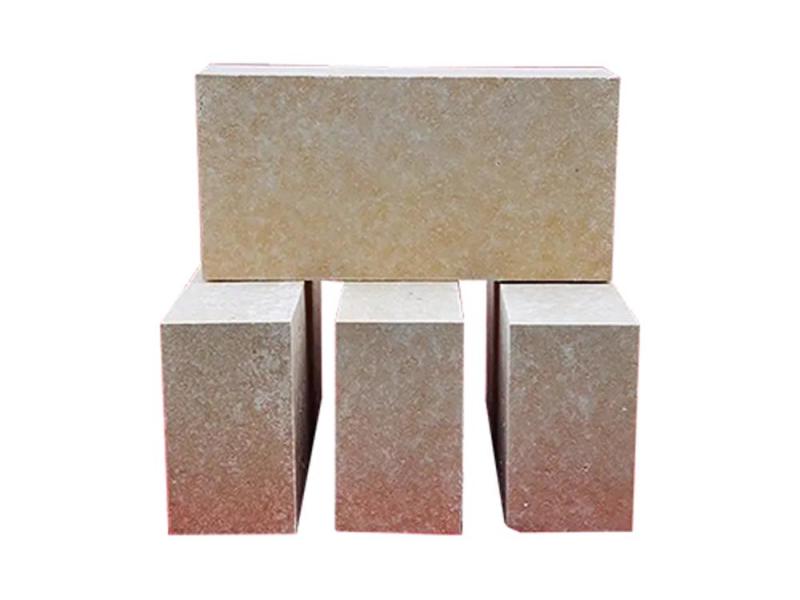
Its main characteristics are reflected in the following aspects:
1. Excellent erosion resistance and dense structure
The most prominent advantage of zirconia corundum bricks is their extremely strong resistance to erosion by melted glass and other molten materials. Their mineral crystal structure consists of a eutectic of corundum (α-Al₂O₃) and zircon (ZrO₂), filled with a glassy phase, resulting in an extremely dense overall structure. For example, AZS-36# bricks have a bulk density exceeding 3.85 g/cm³ and an apparent porosity ≤1.0%, effectively preventing slag penetration.
2. Excellent high-temperature mechanical properties
This material has a refractoriness exceeding 1700℃, a high load softening temperature, and maintains high mechanical strength even at high temperatures. Its room-temperature compressive strength can reach over 300 MPa, capable of withstanding thermal stress and erosion in high-temperature equipment such as glass kilns.
3. Reliable thermal shock resistance
Although its high density results in inferior thermal shock resistance compared to some sintered products, it still possesses good thermal shock resistance through process control. Furthermore, it should be noted that the ZrO₂ phase transformation near 1000℃ causes a volume change of approximately 0.8%, therefore expansion joints must be reserved during construction.
4. Strictly controlled glass phase exudation and bubble sedimentation
When used in glass furnaces, the exudation temperature of the glass phase in the bricks must be above 1400℃, and the bubble sedimentation rate at 1300℃ for 10 hours must be ≤1.2%. This ensures that at high temperatures, the bricks will not contaminate the molten glass or affect the glass quality due to their own sedimentation.
Based on these characteristics, fused cast zirconia-corundum bricks (fused casting type) are widely used in key areas that come into direct contact with molten glass, such as the pool walls, flow channels, and paving bricks of glass melting furnaces. Sintered zirconia-corundum bricks, due to their better thermal shock resistance, are often used in the upper structure of the furnace or in areas with large temperature fluctuations.