
Lightweight clay insulating bricks, as the name suggests, are functional refractory materials that combine lightweight, heat insulation, and high-temperature resistance. Their core application is to construct an efficient “thermal insulation barrier” for various industrial thermal equipment, significantly reducing heat loss and achieving energy conservation while protecting the equipment structure and extending its service life.
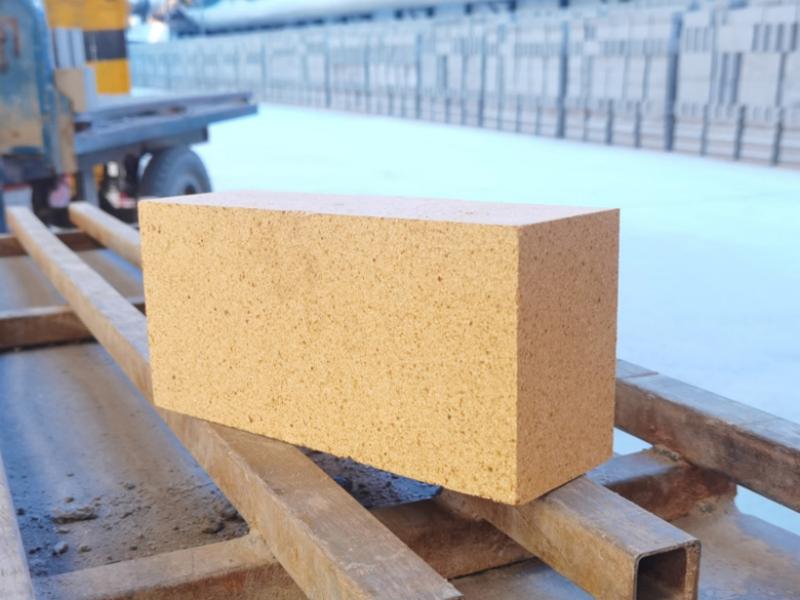
Lightweight clay insulating bricks are made from refractory clay, with an Al₂O₃ content typically between 30% and 48%. Their interior is rich in numerous uniformly distributed micropores, with a porosity as high as 40%-85%. This results in low bulk density (typically 0.3-1.3 g/cm³) and low thermal conductivity (generally below 1.0 W/(m·K)), thus possessing excellent thermal insulation performance.
Based on these characteristics, their applications can be summarized as follows:
Main Application: Insulation Layer for Industrial Kilns
This is the most important and widespread application of lightweight clay insulating bricks. It is typically used as an insulation layer between the working lining (high-temperature bricks in direct contact with flames or materials) and the steel structure of industrial kilns. This “sandwich layer” locks in heat, preventing significant heat loss through the furnace walls, thus greatly improving thermal efficiency and saving energy. Due to its relatively weak mechanical strength and slag erosion resistance, it is generally not used in areas directly in contact with molten metal, slag, or subjected to strong erosion.
Application Scenarios: Covering numerous thermal equipment
With its good applicability, it is widely used in thermal equipment in various industrial fields, mainly including:
Metallurgical Industry: Blast furnaces, hot blast stoves, coking furnaces, soaking furnaces, etc.
Building Materials Industry: Glass kilns, cement kilns, etc.
Chemical and Power Industries: Fertilizer gasification furnaces, thermal boilers, flues, pipelines, etc.
Others: Electric furnaces, casting bricks, various heating devices, and refining equipment, etc.
Usage Points and Precautions
The operating temperature of lightweight clay insulating bricks is generally limited to 1200-1400℃. In practical applications, products with different bulk densities and strength grades need to be selected based on the temperature and operating conditions of different parts of the kiln. For example, bricks with lower density (e.g., 0.6 g/cm³) have better thermal insulation performance, but also lower strength; while bricks with higher density (e.g., 1.2 g/cm³) can withstand slightly higher mechanical loads. When selecting materials, it is essential to ensure that their “re-firing linear variation test temperature” is higher than the actual operating temperature of the kiln to guarantee dimensional stability and structural safety at high temperatures.