Sintered zirconia-corundum bricks are key refractory materials in high-temperature industries. Their core properties, such as high-temperature resistance, erosion resistance, and thermal shock stability, are mainly constrained by four factors: raw material ratio, sintering process, microstructure, and additives. These factors are interrelated and collectively determine the quality of the finished product.
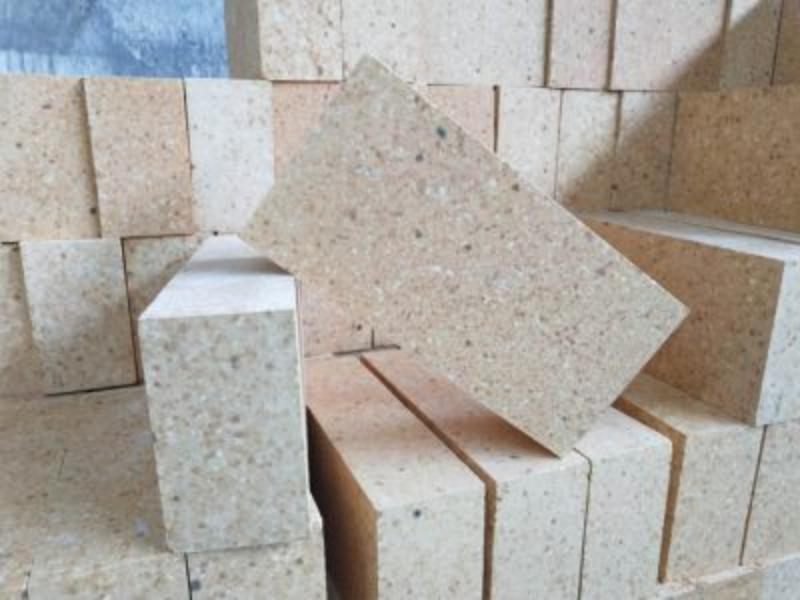
The raw material ratio is a fundamental core factor, primarily depending on the ratio of zirconium oxide to alumina. When the ZrO₂ content is controlled between 38% and 42%, the brick’s high-temperature strength and thermal shock stability are optimal. Too low a content leads to insufficient toughness and a decrease in high-temperature strength. Too high a content triggers the zirconium oxide phase transformation, causing volume expansion, exacerbating brick cracking, and reducing thermal shock resistance. Simultaneously, raw material purity is crucial; excessive impurities will generate a low-melting-point glassy phase, significantly weakening the product’s high-temperature resistance and erosion resistance.
The sintering process directly determines the brick’s density and crystal structure. The sintering temperature needs to be precisely controlled between 1750 and 1800℃, with temperature deviations strictly controlled within ±5℃. Insufficient temperature leads to incomplete raw material reaction, high apparent porosity, loose structure, and decreased strength. Excessive temperature causes abnormal crystal growth, disrupting structural uniformity and reducing thermal stability. Furthermore, holding time and firing atmosphere affect grain boundary bonding strength and phase composition; improper processes can easily generate internal defects.
Microstructure and additives are key to performance optimization. A uniform and dense grain structure and an appropriate amount of stable grain boundary phase can improve the strength and thermal shock resistance of the brick. Appropriate amounts of sintering aids and other additives can refine grains, lower sintering temperature, optimize phase structure, and inhibit particle agglomeration. However, excessive additives can enrich grain boundaries, forming weak interfaces, which conversely reduces high-temperature performance and affects the product’s lifespan.