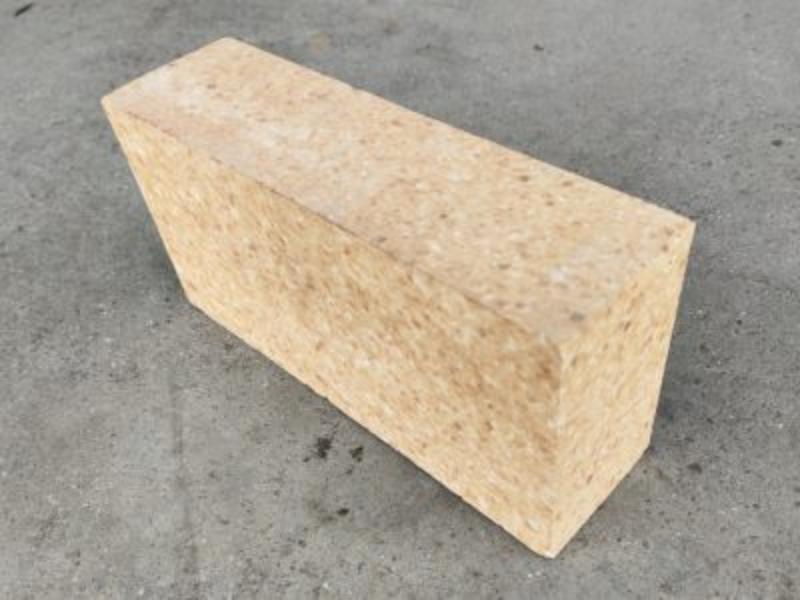
Improving the performance of sintered zirconia-corundum bricks hinges on systematic process optimization focusing on their microstructure. This primarily involves three core approaches: raw material formulation optimization, molding and sintering process control, and the introduction of reinforcing phases.
Raw Material Formulation Optimization: Solidifying the Performance Foundation
The formulation is the cornerstone determining the final performance of the brick. Optimization strategies mainly focus on the following aspects:
Controlling the Stabilization of ZrO₂: ZrO₂ undergoes a crystal transformation at high temperatures accompanied by volume changes, which is crucial to the material’s thermal shock resistance. By adding stabilizers such as MgO, CaO, and Y₂O₃, it can be stabilized in the tetragonal or cubic phase, avoiding destructive phase transformations. The portion of stabilized tetragonal ZrO₂ retained within the brick can induce phase transformation and toughening during microcrack propagation, significantly improving thermal shock resistance.
Improving raw material purity and activity: Use high-purity α-Al₂O₃ micro powder and selected zircon concentrate (ZrO₂ content should be above 65%, and the total impurities such as TiO₂ and Fe₂O₃ should be less than 1%). Using ultrafine powders (e.g., approximately 50% of particles are 2μm) can increase reactivity and promote sintering densification.
Introducing composite additives: Adding trace amounts of nano-alumina powder or toughening agents to the formulation can further refine grains and induce crack deflection, improving fracture toughness. For specific working conditions, components such as chromium oxide (Cr₂O₃) can be introduced to form a solid solution with Al₂O₃, enhancing resistance to slag or molten glass erosion.
Process control: Ensuring performance realization.
Even with an excellent formulation, improper preparation processes will prevent the full realization of performance. Key process control points include:
Addressing firing expansion: When using zircon and alumina as raw materials, the solid-phase reaction between the two is accompanied by approximately 16.6% volume expansion, which can easily lead to cracking of the brick blank. This can be mitigated by pre-firing some of the raw materials to accelerate the reaction, or by improving the fineness of the powder to improve sintering performance and offset the harmful expansion.
Using high-pressure molding and high-temperature firing: High-pressure molding (or even isostatic pressing) is crucial for reducing the porosity of the green body and increasing its density. The firing temperature needs to be controlled between 1700℃ and 1750℃ to ensure an ideal microstructure with corundum and zircon as the main crystalline phases.
Optimizing the annealing regime: For large or irregularly shaped bricks, thermal stress caused by uneven cooling is a major cause of cracking. A balanced annealing process should be used, with differentiated heat preservation for different parts of the brick to ensure uniform heat dissipation and prevent crack formation.
Introducing Reinforcing Phases: Imparting Special Functions
To meet specific working conditions, performance breakthroughs can be achieved by introducing reinforcing phases:
Introducing Metallic Phases: Introducing metallic components such as ferrochrome powder into the matrix, forming a “metal-ceramic reinforcement” through sintering. The metallic phase effectively encapsulates ceramic particles, significantly improving the material’s toughness and thermal shock resistance while maintaining hardness.
Using Modified Particles: Using “modified fused zirconia-corundum particles” prepared through a special sintering process, giving them a short fibrous structure, which significantly enhances the overall fracture resistance through pull-out effects and crack deflection mechanisms.
Improving the performance of sintered zirconia-corundum bricks is a systematic project. The core lies in utilizing the phase transformation toughening mechanism of partially stabilized ZrO₂ to enhance thermal shock resistance, pursuing densification through high-purity ultrafine powder and high-pressure, high-temperature processes to enhance corrosion resistance, and supplementing with additives and reinforcing phases for precise performance control, thereby meeting the application requirements of harsh conditions such as glass furnaces and high-temperature smelting.