
Clay fire bricks are a key refractory material for constructing blast furnace hot blast stoves. Although some areas have been replaced by more heat-resistant materials due to the trend towards higher blast temperatures, they still play an irreplaceable role in the medium- and low-temperature zones of the hot blast stove.
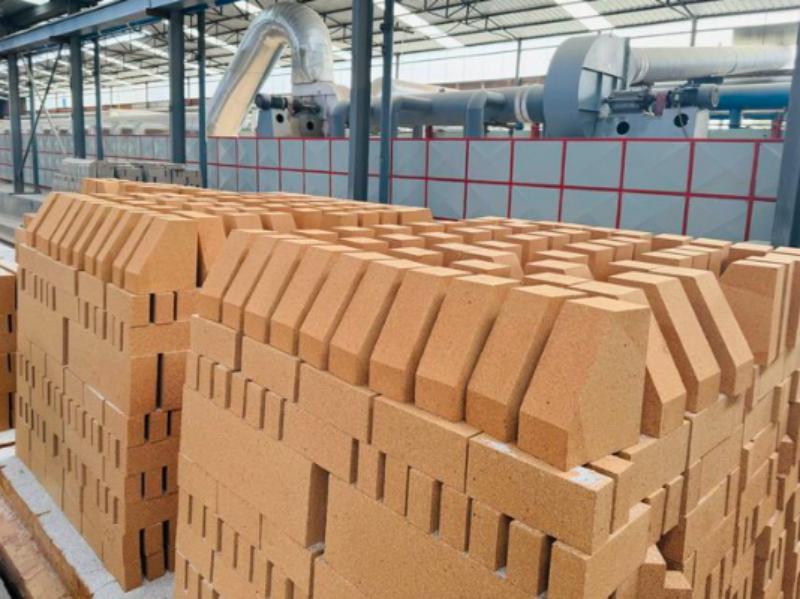
Its core uses in the hot blast stove are mainly as follows:
Constructing the Core Regenerator (Checker Bricks)
Clay fire bricks are often made into checker bricks with designs such as 19 or 37 holes, and are stacked alternately in the regenerator chamber. During the “fire-up” period, high-temperature flue gas flows through the checker bricks and transfers heat to the bricks. During the “blast” period, cold air flows through the heated checker bricks and quickly becomes hot air above 1200°C before being sent into the blast furnace. It acts as a “heat transfer station.”
Constructing the Furnace Lining and Partition Walls in High-Temperature Zones
Besides the regenerator chamber, clay fire bricks are also used to construct the combustion chamber and partition walls. It serves to isolate different functional areas and prevent gas mixing, and since it comes into direct contact with the flame, it requires excellent thermal shock resistance to prevent spalling and cracking caused by frequent temperature fluctuations.
Coping with High-Temperature Creep and Thermal Shock
The Al₂O₃ content in clay fire bricks is typically between 30% and 44%, which is fundamental to its performance. Compared to more expensive high-alumina or silica bricks, clay fire bricks exhibit volume stability (low creep) under long-term high temperatures and can withstand rapid temperature changes without damage, while also being less expensive, making them suitable for large-scale use.
Constructing Key Orifices and Pipelines
In critical areas of the hot blast stove, such as the hot blast inlets and combustion ports, where structures are complex and stress is concentrated, clay fire bricks are processed into composite bricks. These specially made brick masonry structures are robust, ensuring the long-term stable operation of the furnace under high temperature and pressure.
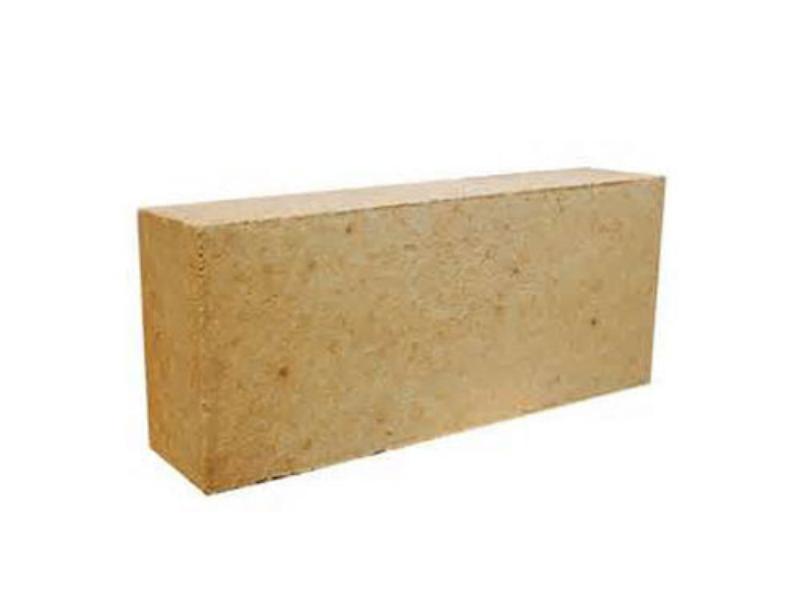
It should be noted that the load softening point of clay fire bricks (approximately 1350-1400℃) limits their use in high-temperature areas exceeding 900℃ for extended periods (such as vaults). These areas will be replaced with silica bricks or high-alumina bricks, which together form the overall configuration of the hot blast stove refractory materials.