
Clay bricks (refractory clay bricks) play an irreplaceable role in coke ovens. Although their performance indicators (such as softening temperature under load) are not as good as silica bricks, their good thermal shock resistance and low cost make them widely used in secondary parts or low-temperature areas of coke ovens.
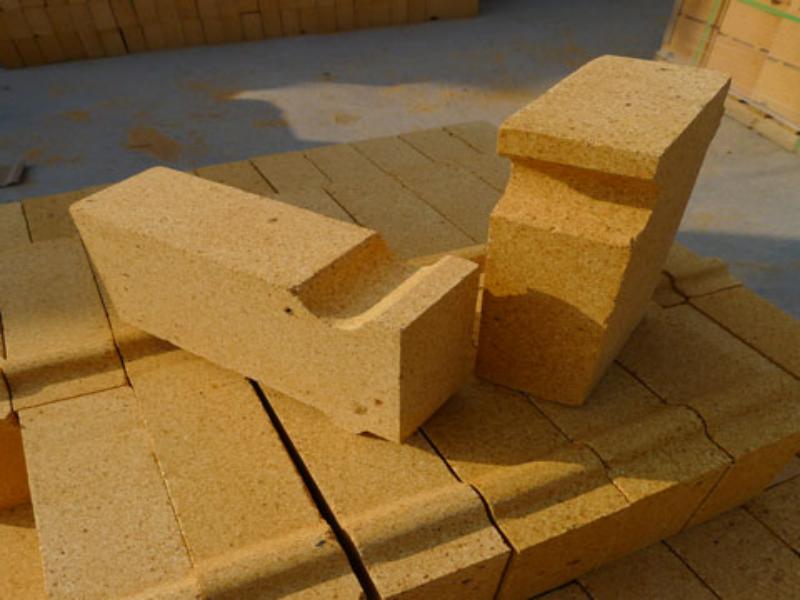
Specifically, the main applications of clay bricks in coke ovens include:
1. Roofing Area: Around the coal charging holes and the top cover layer of the coke oven roof, where temperature fluctuations are drastic, brittle silica bricks are unsuitable. Therefore, clay bricks are commonly used to resist the thermal stress caused by rapid heating and cooling.
2. Regenerators and Small Flues: The sealing walls of regenerators, checker bricks, and the lining of small flues are among the most widespread applications of clay bricks. Small flues operate at approximately 270℃ and mainly face low-temperature chemical corrosion. Clay bricks are well-suited to this condition and offer high cost-effectiveness.
3. Oven Doors and Ascending Pipes: The side of the coke oven door facing the carbonization chamber must withstand significant temperature differences and mechanical impacts from frequent opening and closing. Clay bricks are used due to their excellent thermal shock resistance and wear resistance. Furthermore, clay bricks are also commonly used for the lining of the ascending pipes.
4. Dry Quenching Unit: In the easily worn parts of the dry quenching unit, dense clay bricks are often used as a working layer to resist the strong impact and abrasion from coke.
In summary, clay bricks in coke ovens primarily serve auxiliary functions such as support, insulation, and sealing. Although their structural strength at high temperatures is not as high as silica bricks, their unique thermal shock resistance and lower price make them an indispensable “all-purpose brick” in coke oven construction.


