
Kilns used in the lime industry are collectively referred to as lime kilns. Their core principle is to calcine limestone at high temperatures (approximately 900-1200℃), decomposing it into calcium oxide and carbon dioxide. According to national standards and industry classifications, modern lime kilns are mainly divided into two categories: rotary kilns and vertical kilns. Vertical kilns, in particular, include various specific kiln types.
Rotary kilns are one of the most widely used kiln types. They have a high degree of mechanization, the largest single-kiln capacity (up to 1500t/d), can use small-particle raw materials (15-50mm), and produce lime with the highest activity (over 400ml), resulting in uniform quality. Their disadvantages are relatively high heat consumption and large equipment investment.
Vertical kilns are another major category. Material is added from the top and moves downwards. They are further divided into several types based on their structure:
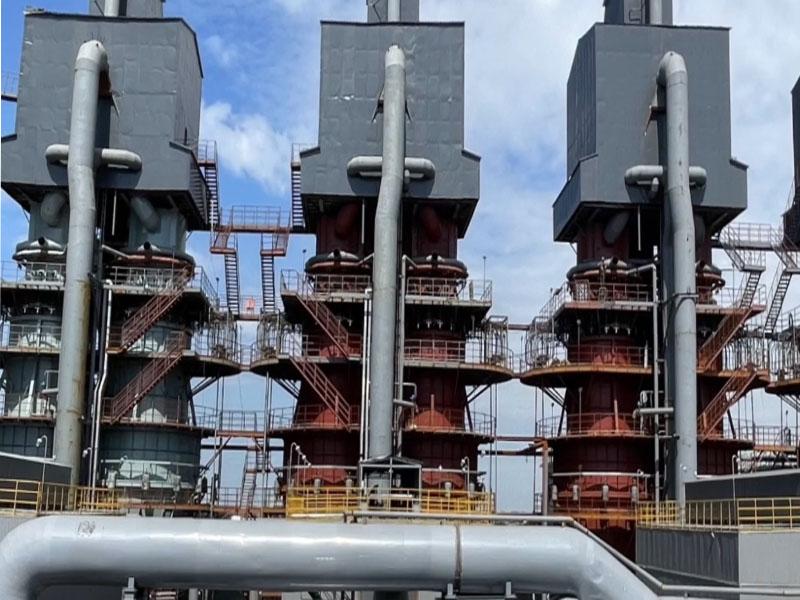
Double-chamber vertical kilns: Also known as Maize kilns, they employ the principle of parallel-flow regenerative heating, with two kiln chambers alternating between calcination and preheating. They have extremely low heat consumption, making them one of the lowest energy-consuming kiln types, producing high-quality lime, but requiring more precise operation.
Sleeve Kiln: Features two concentric cylindrical layers, ensuring uniform calcination and stable lime activity. However, its complex structure places high demands on refractory materials, making maintenance relatively difficult.
Beam Kiln: Utilizes a combustion beam as the thermal actuator, allowing the use of various fuels and producing lime with good activity. This is the fastest-growing kiln type in China.
Domestic Gas-Fired Vertical Kiln: A traditional kiln type with the lowest investment. It can produce active lime using coal gas as fuel, but its thermal efficiency is relatively low.
Furthermore, traditional mechanized coke vertical kilns remain in use due to their low investment and simple operation, but they suffer from unstable product quality and high energy consumption, and are gradually being replaced by advanced kiln types. The current industry trend is to promote large-scale, low-energy rotary kilns and double-chamber vertical kilns, among other advanced equipment.