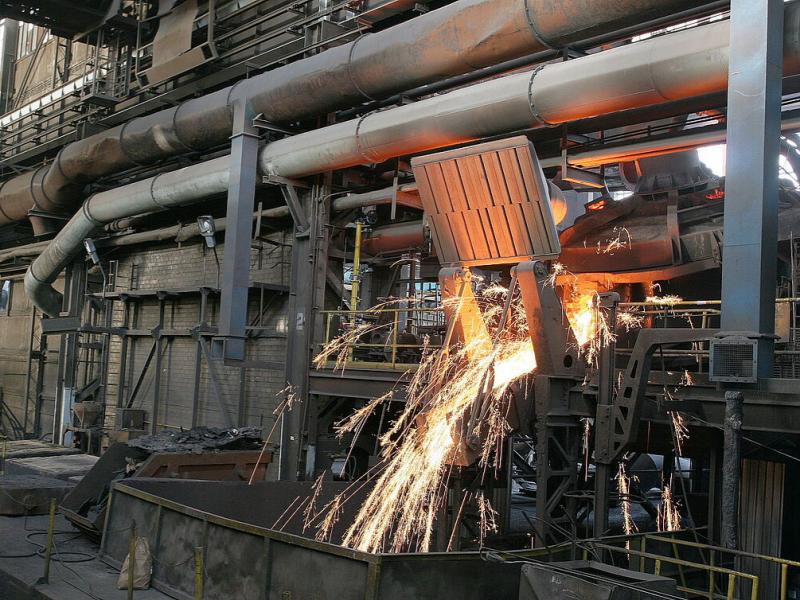
A blast furnace is a vertical smelting furnace primarily used for the roughing and smelting of non-ferrous and ferrous metals. Its core principle is the introduction of high-pressure or oxygen-enriched air through tuyeres at the bottom of the furnace, causing the coke in the charge to combust violently. This generates high-temperature and reducing gases, reducing metal oxides in the ore or sinter to metal, forming molten metal and slag, which are then separated according to density differences and discharged separately.
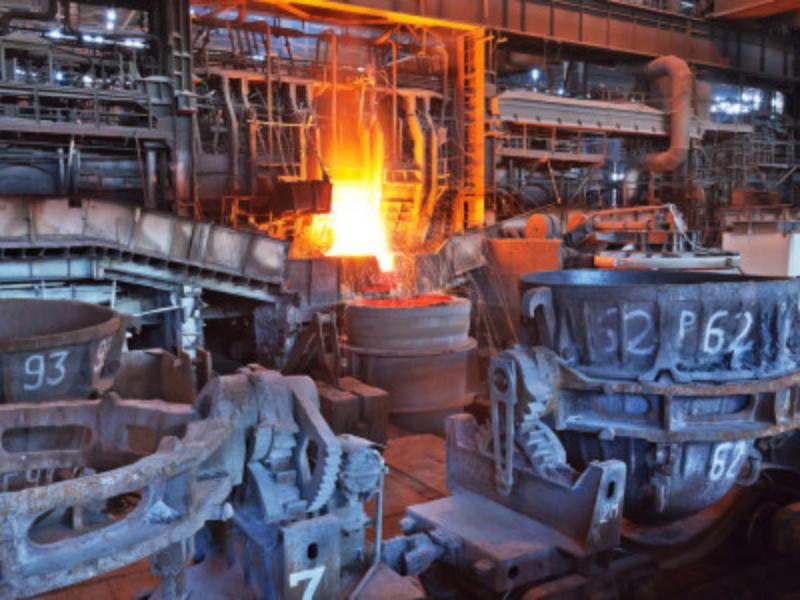
In industrial practice, the most typical application of blast furnaces is in copper smelting. In copper blast furnaces, copper concentrate, after sintering, is added to the furnace along with coke and flux. At high temperatures, copper is reduced and melted into matte, which separates from the slag, achieving initial copper enrichment. Lead blast furnaces are used to process lead sinter, producing crude lead and slag, a crucial step in traditional lead smelting. In tin smelting, blast furnaces can be used to reduce and smelt tin concentrate to obtain crude tin. Furthermore, blast furnaces are also used to process ores or secondary materials containing metals such as antimony and bismuth, recovering valuable metals.
In the ferrous metallurgical industry, blast furnaces sometimes refer to small ironmaking furnaces or blast furnaces used in foundries to smelt pig iron. However, modern large-scale ironmaking generally uses blast furnaces. Blast furnaces are also used to smelt copper alloys, aluminum alloys, etc., and to process secondary resources such as metallurgical slag and dust, and to recover metals such as copper, lead, and zinc. Their advantages include simple structure, low investment, strong adaptability, and the ability to process lumpy and sintered materials. Disadvantages include high energy consumption, high dust content in flue gas, poor working conditions, and certain requirements on material particle size. With increasing environmental protection requirements, modern blast furnaces are mostly equipped with flue gas purification and waste heat recovery systems, and are gradually developing towards oxygen-enriched smelting and closed-loop systems to improve efficiency and reduce pollution.