
Clay insulating bricks, also known as lightweight clay bricks, are a type of heat-insulating refractory product made primarily from refractory clay. Their core advantage lies in combining thermal insulation performance with a certain degree of high-temperature resistance, making them widely used in industrial kilns and construction.
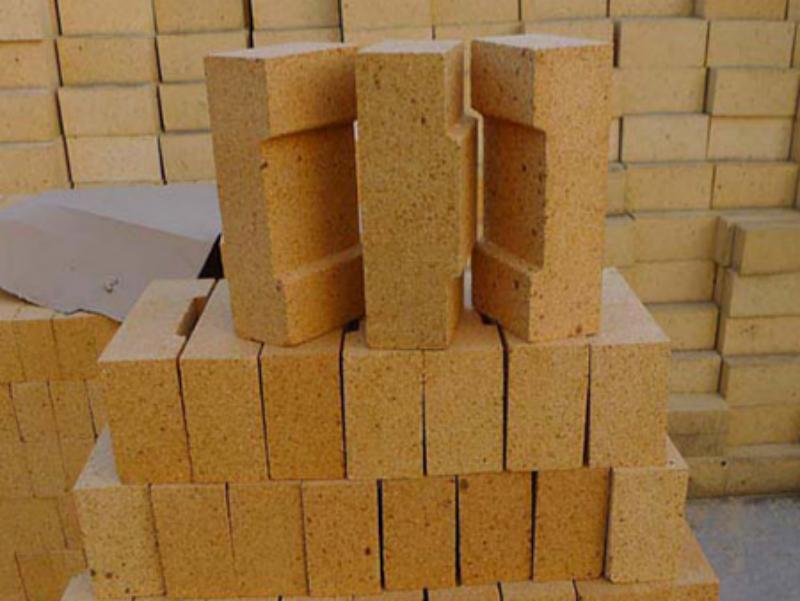
Their main characteristics can be summarized as follows:
Excellent Thermal Insulation Performance
This is the most crucial characteristic of clay insulating bricks. The brick body contains numerous fine pores, and its bulk density is typically between 0.3-1.3 g/cm³, far lower than ordinary refractory bricks, resulting in a very low thermal conductivity (e.g., 0.221-0.442 W/(m·K)). This effectively reduces heat loss, significantly improving the energy efficiency of industrial kilns, and providing a cooling effect in winter and summer when used in building walls.
Reliable High-Temperature Resistance and Thermal Stability
As a refractory material, it possesses excellent high-temperature resistance, with an Al₂O₃ content generally between 30% and 48%. Depending on its bulk density, its maximum operating temperature can reach 1200℃-1400℃, meeting the requirements of most industrial thermal equipment. Simultaneously, it exhibits good thermal shock resistance, able to withstand drastic temperature changes without easily cracking.
Economical and Practical with Good Processability
Compared to high-alumina and other high-grade insulation materials, clay insulating bricks have widely available raw materials, mature production processes, and are more affordable. Furthermore, they are lightweight, easy to cut and drill, facilitating on-site construction and effectively reducing the load on furnace bodies or building structures.
Important Usage Limitations
It should be noted that due to its high porosity, relatively low strength (compressive strength approximately 2.0-5.9 MPa), and weak slag resistance and erosion resistance, clay insulating bricks are typically used as the insulation layer in industrial kilns, rather than the working layer directly exposed to flames, molten slag, and high-speed airflow. In critical areas, a refractory coating is often added to its surface for protection.
In summary, clay insulating bricks, with their combined advantages of high-efficiency insulation, high-temperature resistance, and affordable price, have become an indispensable insulation material in many industrial equipment such as thermal boilers, glass and cement kilns, and hot blast stoves.