
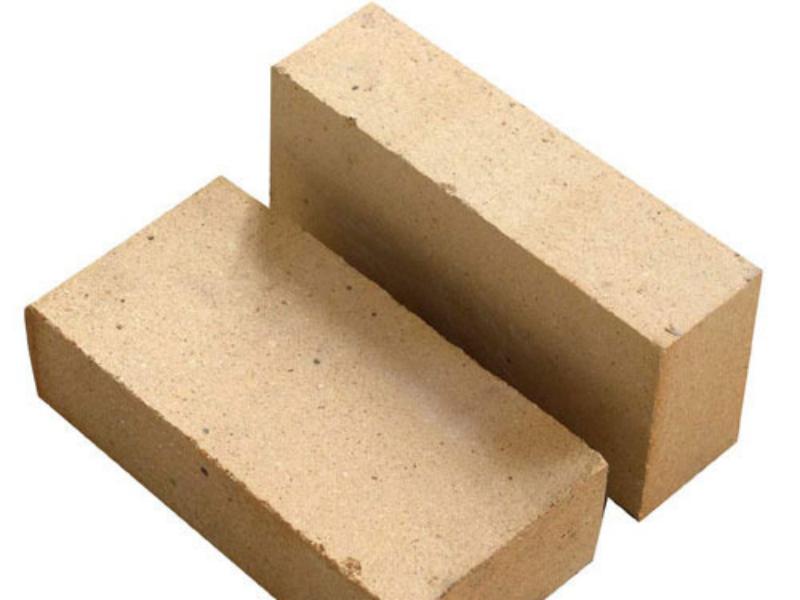
Zirconium bricks are a special refractory material with zirconium oxide (ZrO₂) as its core component. Its performance advantages stem from zirconium oxide’s extremely high melting point (approximately 2713℃) and excellent chemical stability. In critical parts of high-temperature industries such as glass and metallurgy, zirconium bricks, with their excellent erosion resistance, good thermal shock resistance, and high density, have become irreplaceable “long-life” materials.
Core Performance Advantages
Superior Erosion Resistance: This is the most prominent feature of zirconium bricks. They exhibit strong chemical inertness to acid and alkali slags and high-temperature molten glass, making them unlikely to react or be dissolved by the melt. In glass furnaces, their erosion rate is far lower than that of ordinary refractory bricks, effectively preventing impurities from contaminating the molten glass and improving product purity. It also significantly extends equipment lifespan.
Good Thermal Shock Resistance: Refractory materials are prone to cracking due to thermal stress when temperatures change abruptly. Through a special microstructure design (such as introducing a glassy phase as a buffer layer), zirconium bricks effectively absorb and mitigate thermal shock, giving them excellent resistance to rapid heating and cooling. Even under conditions of frequent temperature rises and falls and large temperature fluctuations, it maintains structural integrity.
High density and low porosity: High-quality zirconium bricks, especially those manufactured using the casting process, have high bulk density and extremely low apparent porosity (approaching zero). This makes it difficult for slag and gases to penetrate into the brick body, reducing the entry point for chemical erosion at its source, which is the foundation for its erosion resistance.
Challenges to be overcome
The manufacture and application of zirconium bricks requires solving a technical problem: pure zirconium oxide undergoes a crystal transformation at approximately 1100-1170℃, accompanied by a dramatic volume change of about 7%, which is enough to cause cracking. Therefore, industrially, it is necessary to suppress this harmful volume effect by adding stabilizers (such as yttrium oxide and calcium oxide) or designing specific microstructures (such as introducing a glassy phase) to ensure the stability and reliability of the product at high temperatures.
Key performance reference
Chemical composition: ZrO₂ content is typically between 65% and 95%; the higher the content, the stronger the erosion resistance.
Bulk density: High-density products can reach over 3.6 g/cm³.
Applications: Key components such as pool walls, flow channels, and electrode bricks in high-end specialty glass furnaces.
In summary, zirconium bricks, through ingenious material design, successfully apply the extreme physicochemical properties of zirconium oxide to the most demanding industrial environments, making them a key material for ensuring efficient and long-life operation of high-temperature equipment.