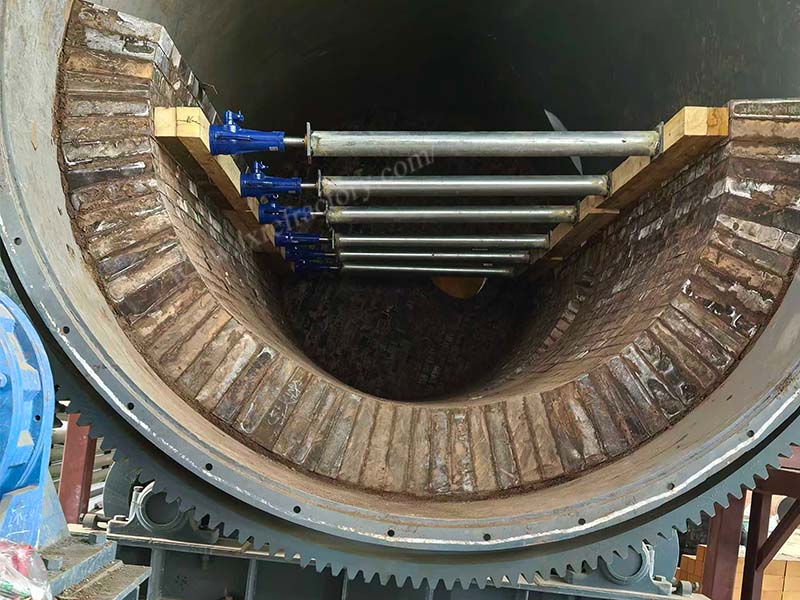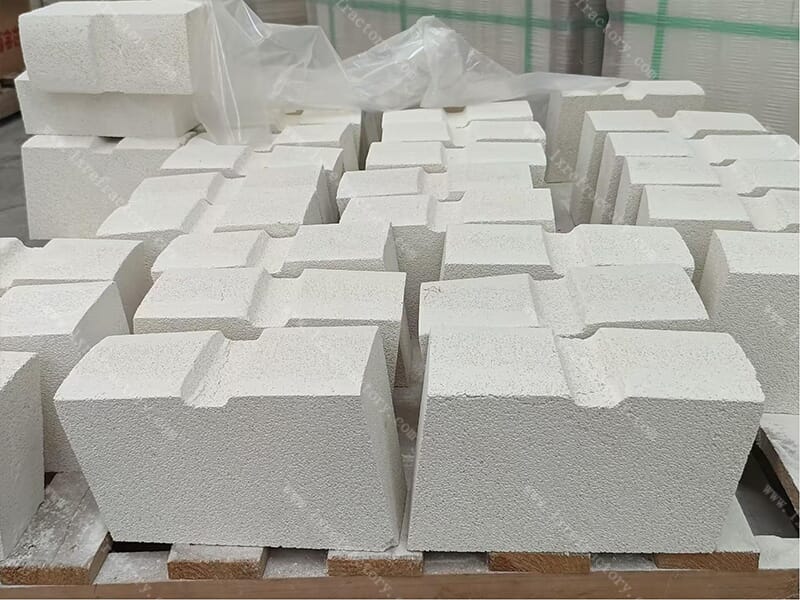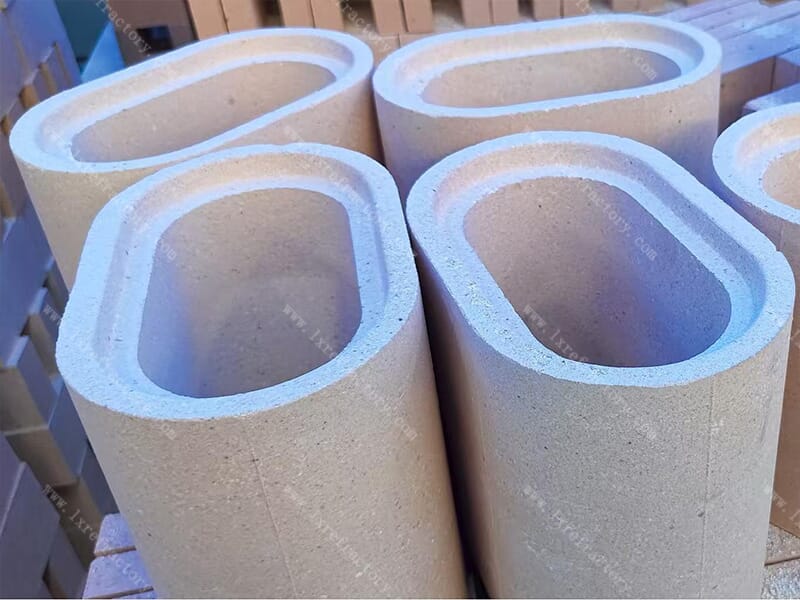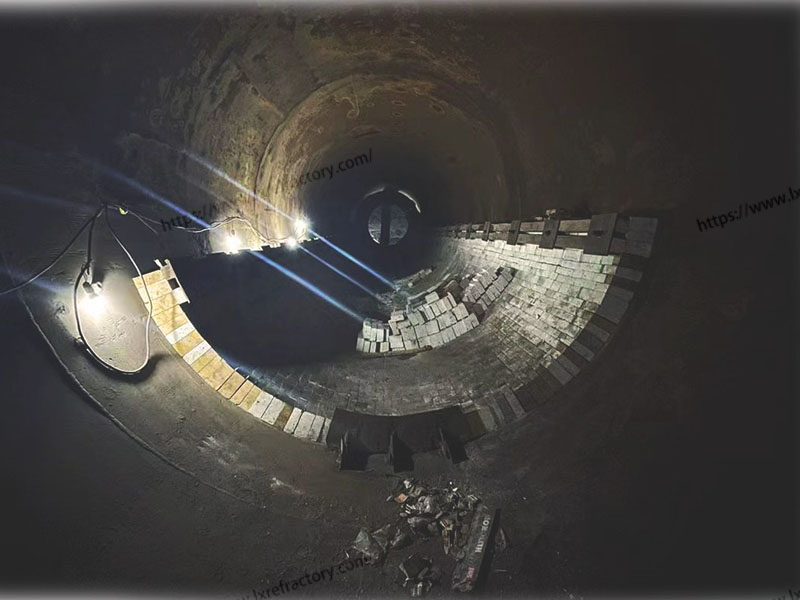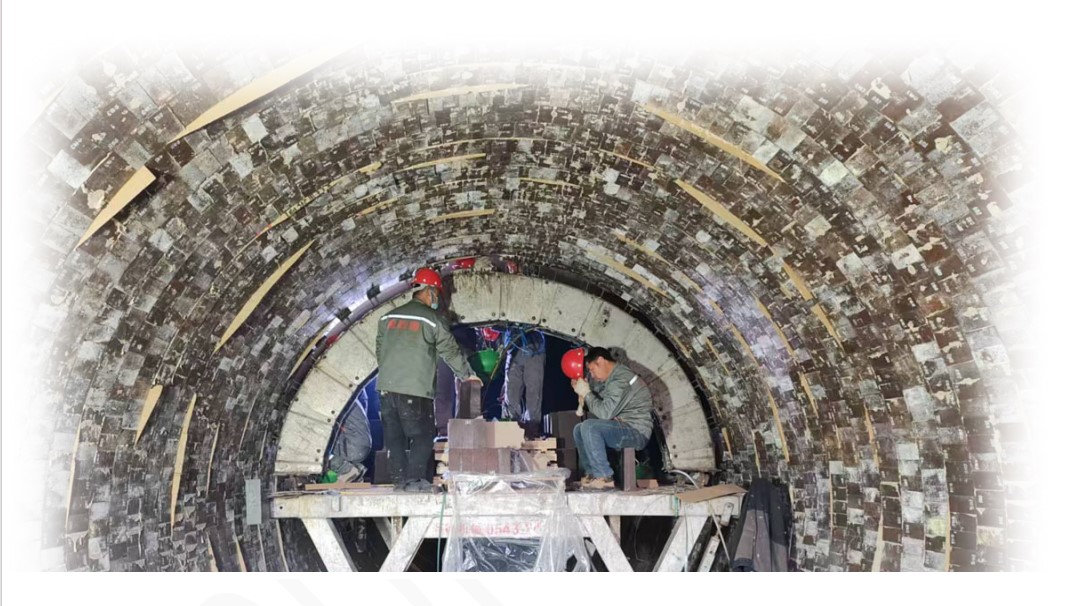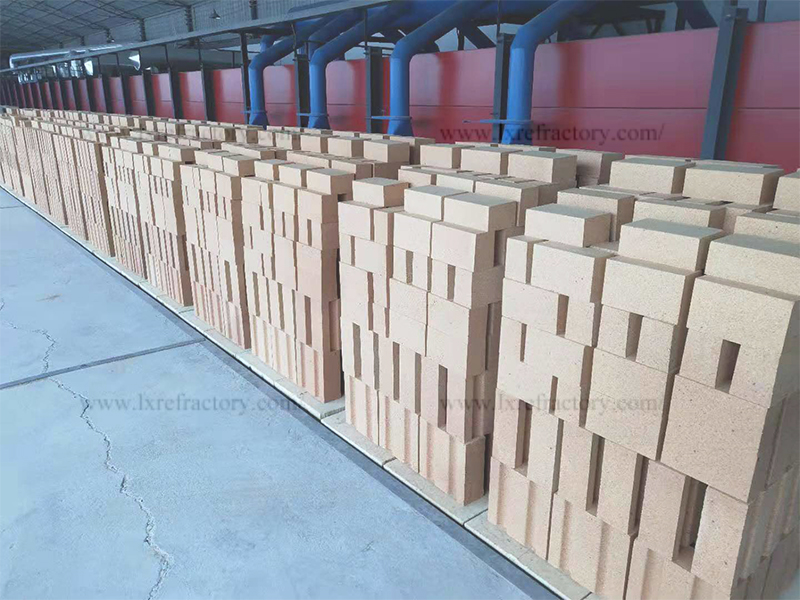
Fluidized bed boilers do not use refractory bricks throughout the entire furnace. Instead, materials are selected based on the degree of wear: castable refractory is used in areas of high wear, while refractory bricks are concentrated in specific critical areas. The main applications are as follows:
In cyclone separators, the most severely worn areas are where precast corundum refractory bricks are primarily used. Areas where flue gas enters or exits tangentially experience extremely strong erosion, typically using precast corundum bricks to resist high-speed particle abrasion. Some high-temperature insulated separators use wear-resistant refractory bricks to construct lightweight furnace walls, balancing wear resistance with reduced suspension weight.
In the return feed system, the inner wall of the U-shaped return valve experiences severe wear. A combination of wear-resistant refractory hook bricks and castable refractory is often used, providing both wear resistance and weight control. The return feed leg section also primarily uses wear-resistant refractory bricks as the inner lining, with castable refractory only used in irregular areas such as expansion joints.
Refractory bricks are also commonly used in the walls of the return feeder and mixing chamber. High-alumina bricks are chosen due to their high compressive strength and good thermal shock resistance. In addition, clay fire bricks or acid-resistant bricks are used for the economizer furnace walls and some flue linings in lower-temperature or acidic environments.

It should be noted that in the most severely worn areas such as the dense phase zone of the furnace, the air distribution plate, and the ignition air chamber, modern CFB boilers generally use high-strength, wear-resistant castable refractory fixed with pins, rather than brickwork. Refractory bricks in fluidized bed boilers play a “precise filling” role, rather than being a material used for the entire furnace.