High alumina refractory materials are aluminum-silicon refractory materials with Al₂O₃ content ≥48%.It can withstand higher temperatures than ordinary clay bricks and is more resistant to slag erosion.
The core definition of high alumina refractory materials
First of all, the core of the definition of high-alumina refractory materials lies in their chemical composition, that is, the content of alumina (Al₂O₃).
Specifically, aluminum-silicon refractories with an alumina content of not less than 48% are generally referred to as high-alumina refractories.
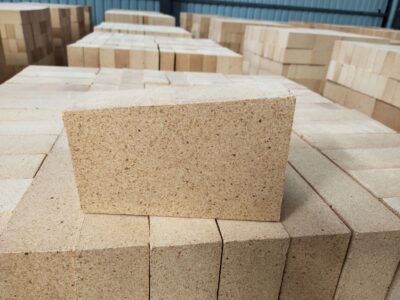
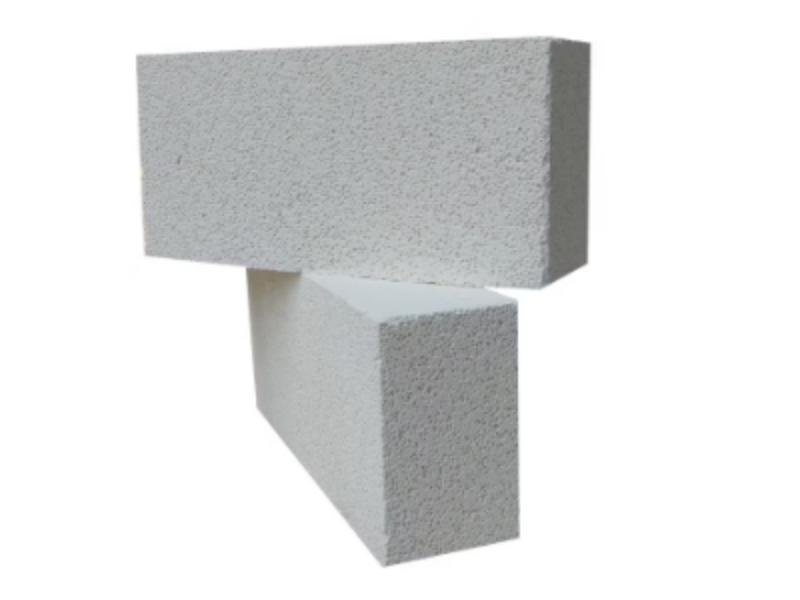
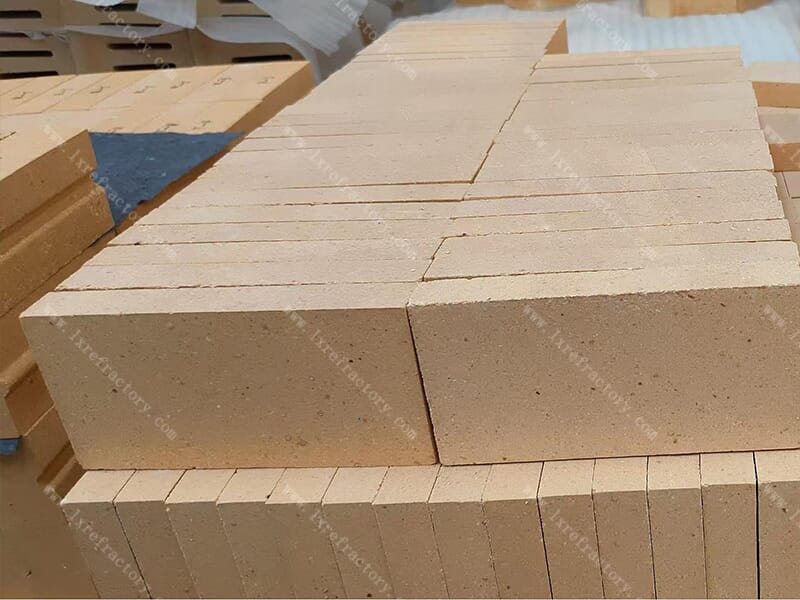
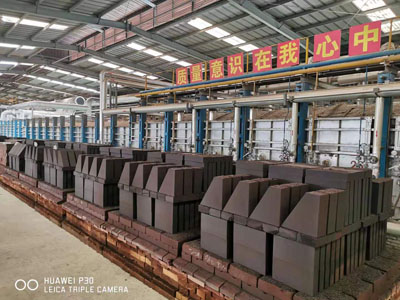
high alumina bricks
This division criterion is key.Because alumina is the main refractory phase, it directly determines the basic properties of the material.
In addition, the material also contains impurities such as silicon dioxide.However, the higher the proportion of alumina, the better the refractoriness and performance of the material are generally.
Therefore, in essence, high-alumina refractory material is a high-temperature resistant product made through a specific process with alumina as the main crystal phase. Its classification and performance evaluation are closely centered around the alumina content.
Main classifications of high alumina refractory bricks
Al₂O₃≥48% is considered high alumina, but there is more than one type of refractory brick.
(1)Conventional high alumina bricks
Generally speaking, high alumina bricks are divided into three grades.Al₂O₃ content of 48%-60% is grade three, 60%-75% is grade two, and ≥75% is grade one.The refractoriness will also increase with the Al₂O₃ step, from 1750℃ to 1790℃.
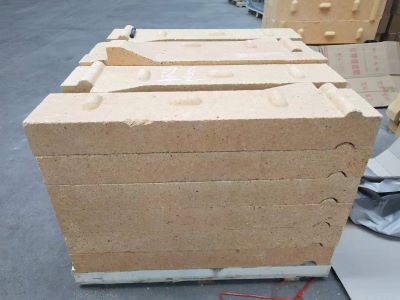
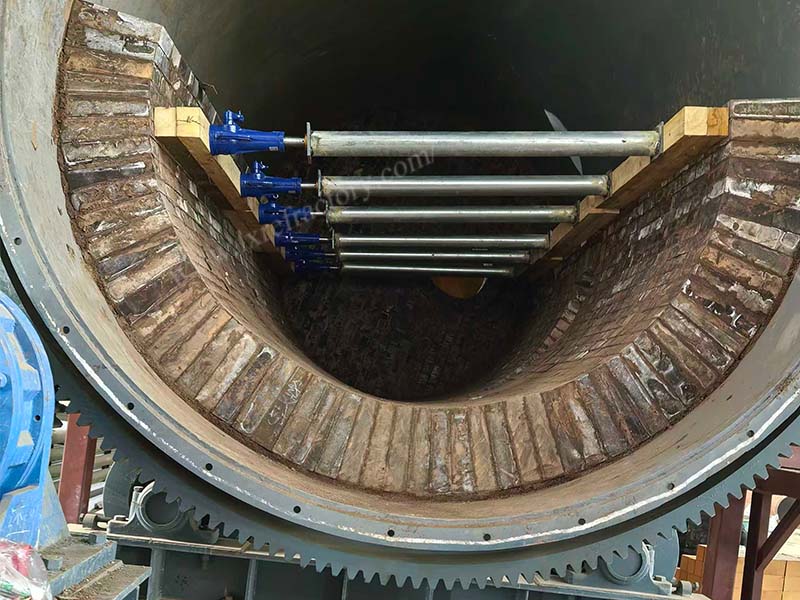
anti-stripping high-alumina brick
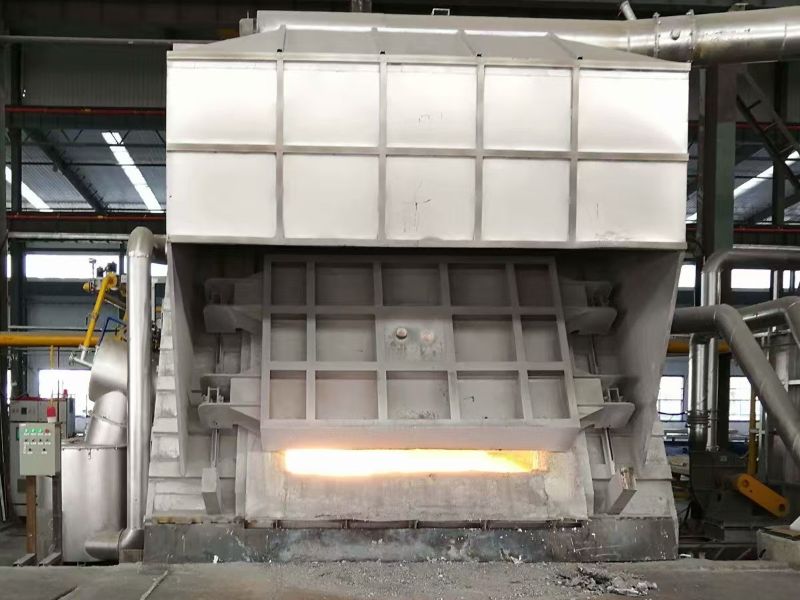
The transition zone of cement kiln, high temperature zone of lime shaft kiln, large crown of glass kiln, etc. are most commonly equipped with one or two levels.
(2)Phosphate, anti-stripping, corundum mullite
If the working conditions are more demanding, the Al₂O₃ content needs to be increased.
Phosphate bonded high alumina bricks
Using 50% phosphoric acid as a binder, an AlPO₄ network is formed at 500°C.The low-temperature strength is higher than that of ceramic bonding and is suitable for the inner wall of dryers that are frequently shut down and started.
Anti-stripping high alumina bricks
The introduction of a small amount of ZrO₂ or steel fiber can generate micro cracks due to thermal expansion differences, which can buffer thermal stress and increase the thermal shock resistance by more than three times that of ordinary high-alumina bricks.
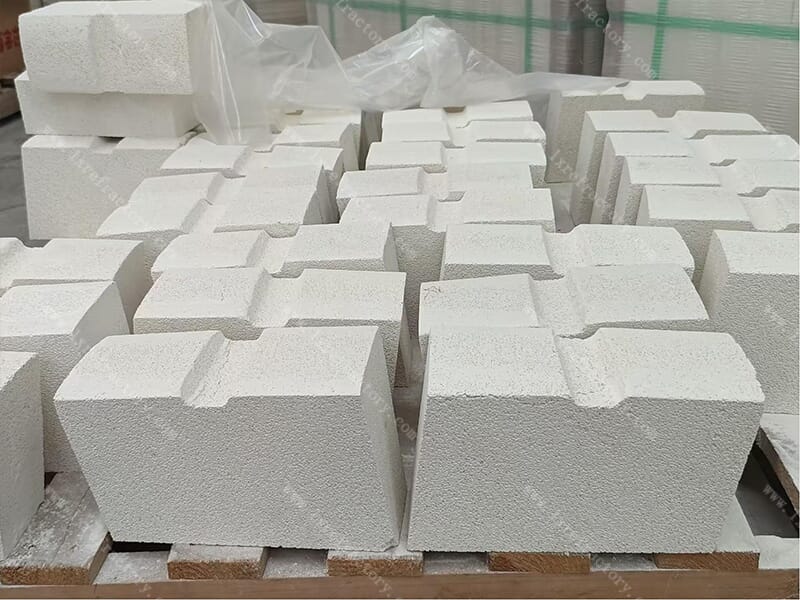
Corundum-Mullite Bricks
Al₂O₃≥80%, with the primary crystal phases being corundum + mullite. With a refractoriness exceeding 1800°C, they are used in glass furnace flow tunnels and carbon black furnace throats.
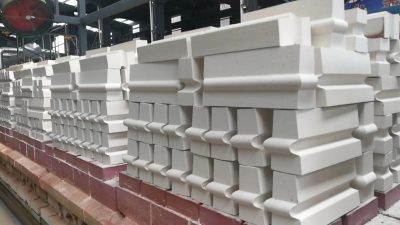
Corundum Mullite Brick
In short, special varieties further subdivide the “high aluminum” platform to solve three types of problems: rapid cooling and heating, mechanical shock, and extreme high temperature.
Unshaped high-alumina materials: castables, plastics, fire clay
In addition to shaped bricks, there are also some high-alumina bulk materials.
(1)High-alumina castable
Al₂O₃ 55%-75%, plus pure calcium aluminate cement. Direct pouring with water on site, suitable for burner ends with complex shapes.
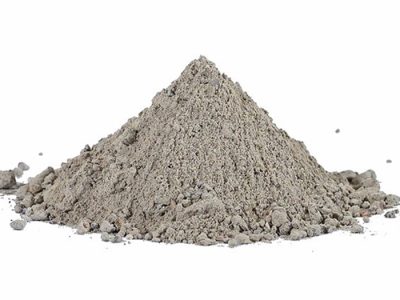
High-alumina castable
(2)High aluminum plastic
Combined with phosphoric acid or aluminum sulfate, ramming construction, no curing period, the maintenance time is the shortest.
(3)High-alumina fireclay
Al₂O₃ 50%-70%, standard material for brick joints, mortar joints ≤2 mm can ensure overall airtightness.
Therefore, the combination of fixed and amorphous shapes can cover the high-temperature area of the entire kiln lining at one time.